
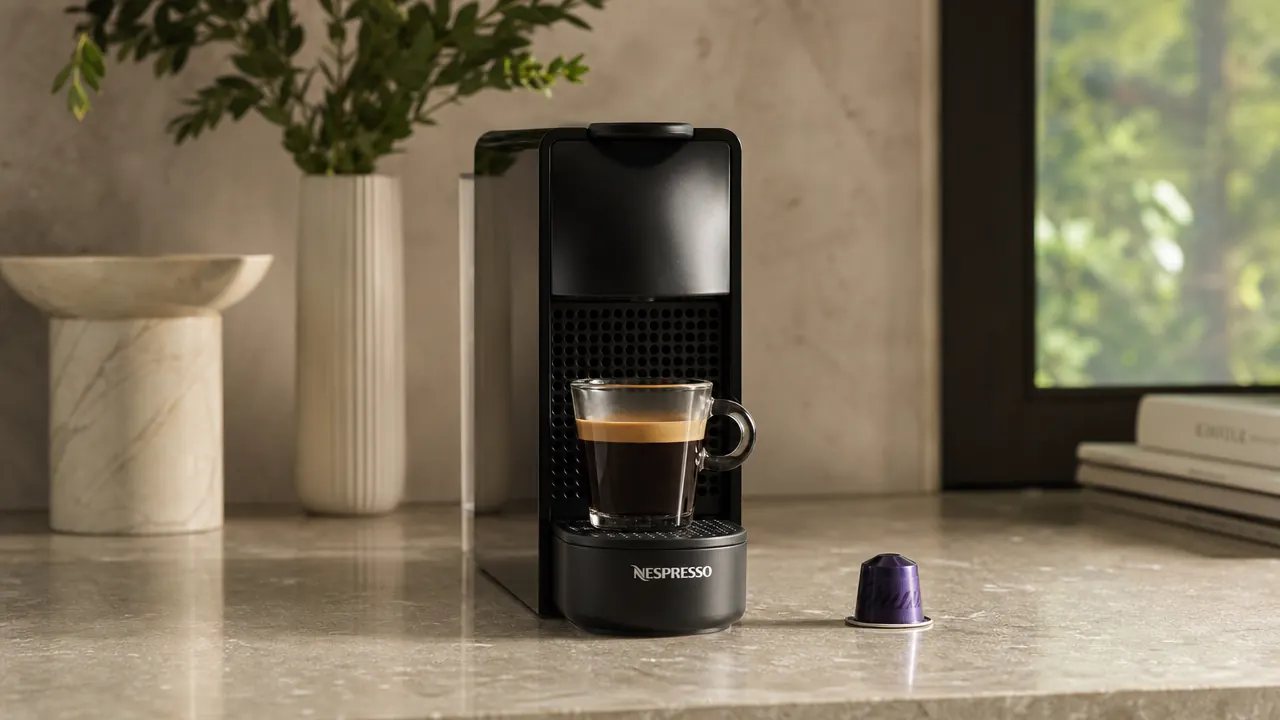
Before I bought the Nespresso Essenza Mini by De'Longhi, I did what most people do: I read the top reviews. They all said the same things. Fast heat-up. Compact. Real espresso crema. Four stars, maybe five. What none of them mentioned was how much those little aluminum pods were going to cost me over time, or that the 600ml water tank means I am refilling it every single morning, or that if I ever wanted a latte or cappuccino I was going to need a completely separate frother because the Essenza Mini does not include one. Those are not dealbreakers for everyone, but they were things I needed to know before I spent close to two hundred dollars.
I have been running this machine daily for 90 days in a one-bedroom apartment with a narrow galley kitchen. Two espresso shots most mornings, sometimes a lungo in the afternoon. I kept a simple log. I counted pods, noted water fill frequency, and paid attention to every moment the machine frustrated me or impressed me. This review covers what that log told me.
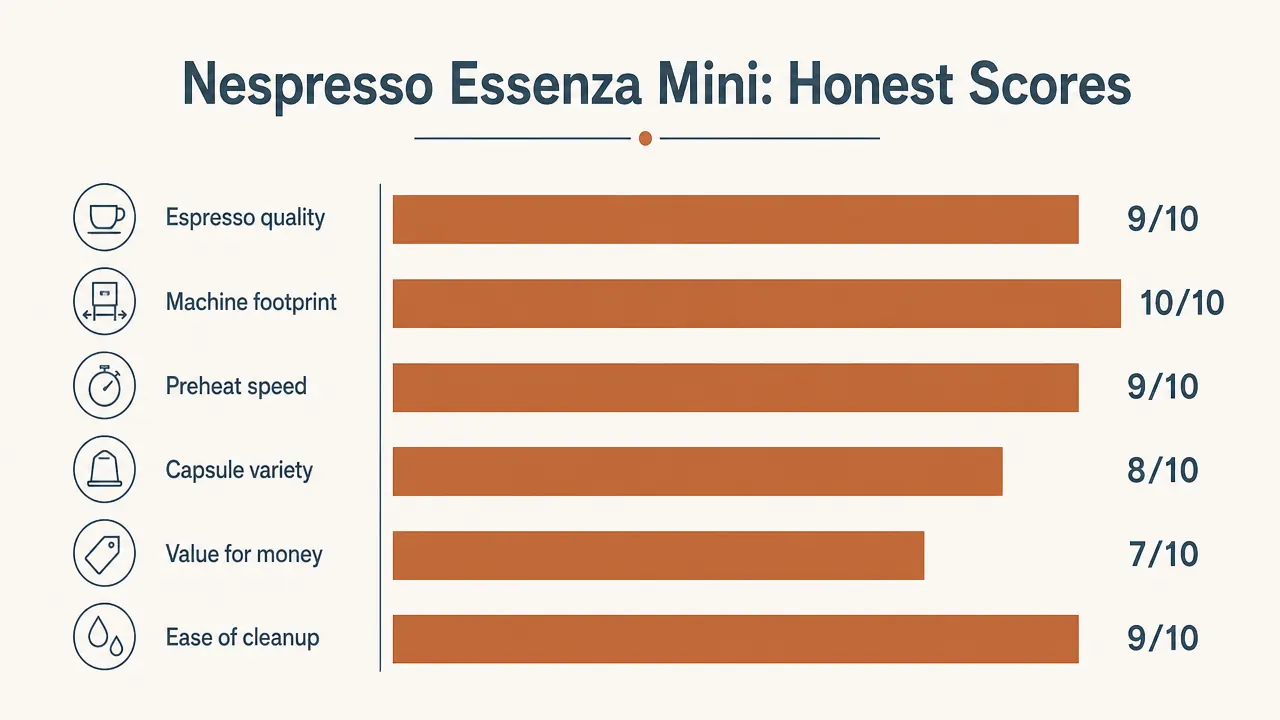
The Quick Verdict
The Essenza Mini makes genuinely good espresso in a very small footprint, but the ongoing pod cost and missing milk frother are real limitations that most short-form reviews skim past.
Amazon Check Today's Price →Want espresso that actually tastes like espresso without a machine the size of a microwave?
The Essenza Mini by De'Longhi is compact, heats up in 30 seconds, and pulls a clean shot with real crema. Check today's price before you read the caveats below.
Amazon Check Today's Price on Amazon →How I Tested It
I started on day one by running a blank water cycle, then pulling two shots of Nespresso Ispirazione Ristretto Italiano to establish a baseline. From there I used the machine every morning without exception. My approach was plain: use it the way a normal person would, note anything that annoyed me or surprised me, and do the math on consumables at the 30-day, 60-day, and 90-day marks. I did not clean it every day (that is not realistic), and I did not babysit the water tank. I wanted to see how it behaved under ordinary neglect.
I also pulled shots from three different pod lines to check for shot-to-shot consistency: the standard Nespresso Original range, a third-party compatible brand, and one of the premium Nespresso Barista Creations pods intended for milk-based drinks. Spoiler: the third-party pods were noticeably weaker, and the Barista Creations pods taste flat without actual steamed milk to go with them.
The Essenza Mini has two brew buttons. The 40ml ristretto/espresso button and the 110ml lungo button. There are no intermediate settings, no temperature adjustment, no programmable options beyond resets. That simplicity is a design choice, and it cuts both ways.
The Pod Cost Math Nobody Shows You
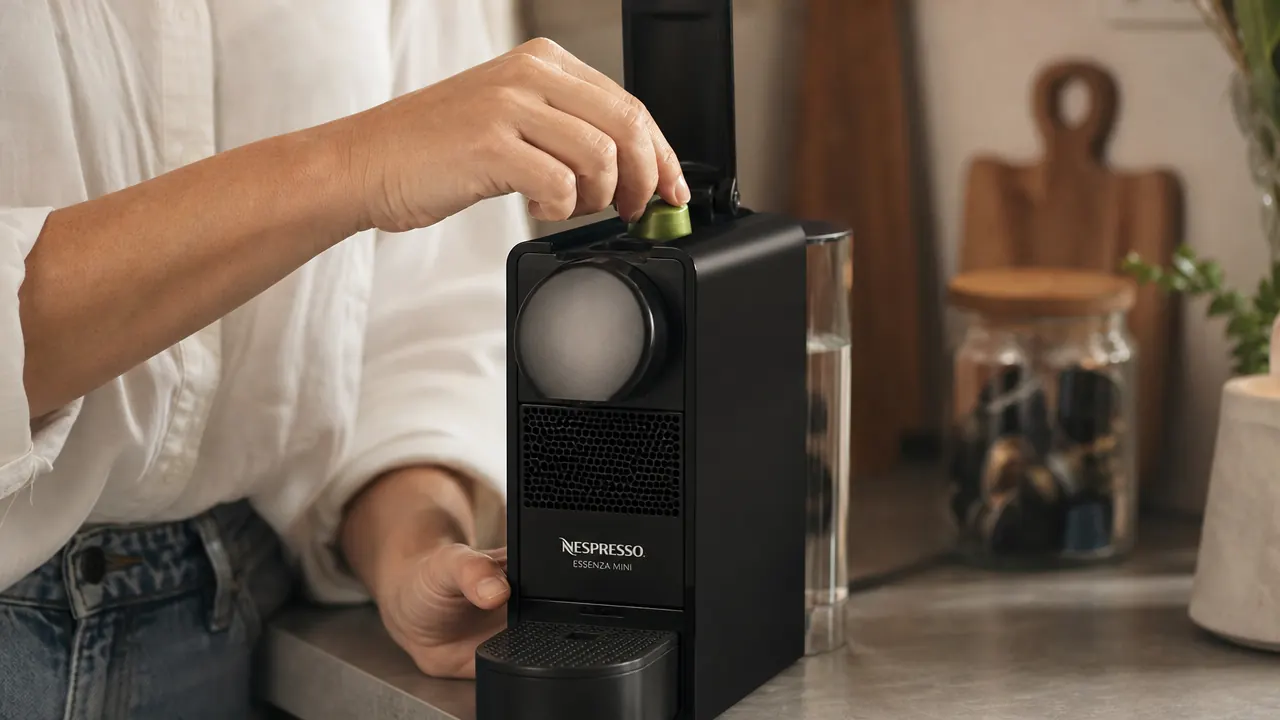
This is the number that shifts the whole calculus. Official Nespresso Original pods run between $0.85 and $1.00 each, depending on the line. At two pods per day, that is $51 to $60 per month. Over a year, you are looking at $612 to $720 in pods alone, on top of the machine cost. For comparison, a decent bag of whole-bean coffee for a drip machine covers a month of brewing for around $12 to $15. The Essenza Mini is not competing with drip coffee on cost. It was never trying to.
Third-party compatible pods exist and cost around $0.40 to $0.55 each, which sounds like a useful savings. In practice, I found the extraction quality noticeably thinner. The crema was present but lighter, and the body of the shot was closer to strong drip coffee than true espresso. If the crema and intensity matter to you, and they probably do if you are buying an espresso machine, you will likely end up back with the official Nespresso capsules within a couple of weeks.
The honest framing: the Essenza Mini is a subscription appliance. The machine is the entry point; the pods are the ongoing cost. If that math works for your budget, the machine delivers on its espresso promise. If you were hoping to escape the daily coffee shop cost by switching to this, run the pod numbers first. For one shot per day the savings over a $4 cafe espresso are real. For two shots per day, the gap narrows considerably.
At two pods per day, pod cost alone runs $51 to $60 per month. The machine pays for itself fast if you drink one shot a day and were buying cafe espresso. It pays for itself slower than the marketing implies if you drink two.
The Missing Milk Frother Is a Real Issue for Most Buyers
The Essenza Mini makes espresso and lungo. Full stop. It does not steam milk. It does not include a frother. The listing page lists "no milk frothing wand" in the specs, but most people do not read the specs on a product they are casually browsing. I have seen multiple reviews from buyers who expected a frother to be included based on the box design and price point. It is not there.
If you drink your espresso straight, or you add cold milk and do not care about foam, this is not a problem. If you want a proper latte, cappuccino, flat white, or macchiato at home, you need to add a separate milk frother to your budget. Nespresso sells its own Aeroccino frother for around $50 to $60, which many buyers end up purchasing within the first month. The Essenza Mini plus an Aeroccino is a more complete setup, but it is also a $240 to $250 combined cost, not $189.
There is a version of the Essenza Mini bundled with the Aeroccino. If you know you want milk drinks, start there rather than buying the solo machine and adding the frother separately. The bundle often prices out the same or slightly better than buying both individually.
The 600ml Water Tank: Smaller Than It Sounds
The 600ml tank is the physical reason this machine fits on a countertop next to a toaster. It is genuinely compact. The tradeoff is that 600ml yields roughly six ristretto shots, four lungos, or some mix in between. At two shots per morning, I was refilling the tank every day. Some mornings I had to fill it mid-session for the second shot. If you drink more than two cups or if multiple people use the machine, the refilling frequency will be a daily friction point.
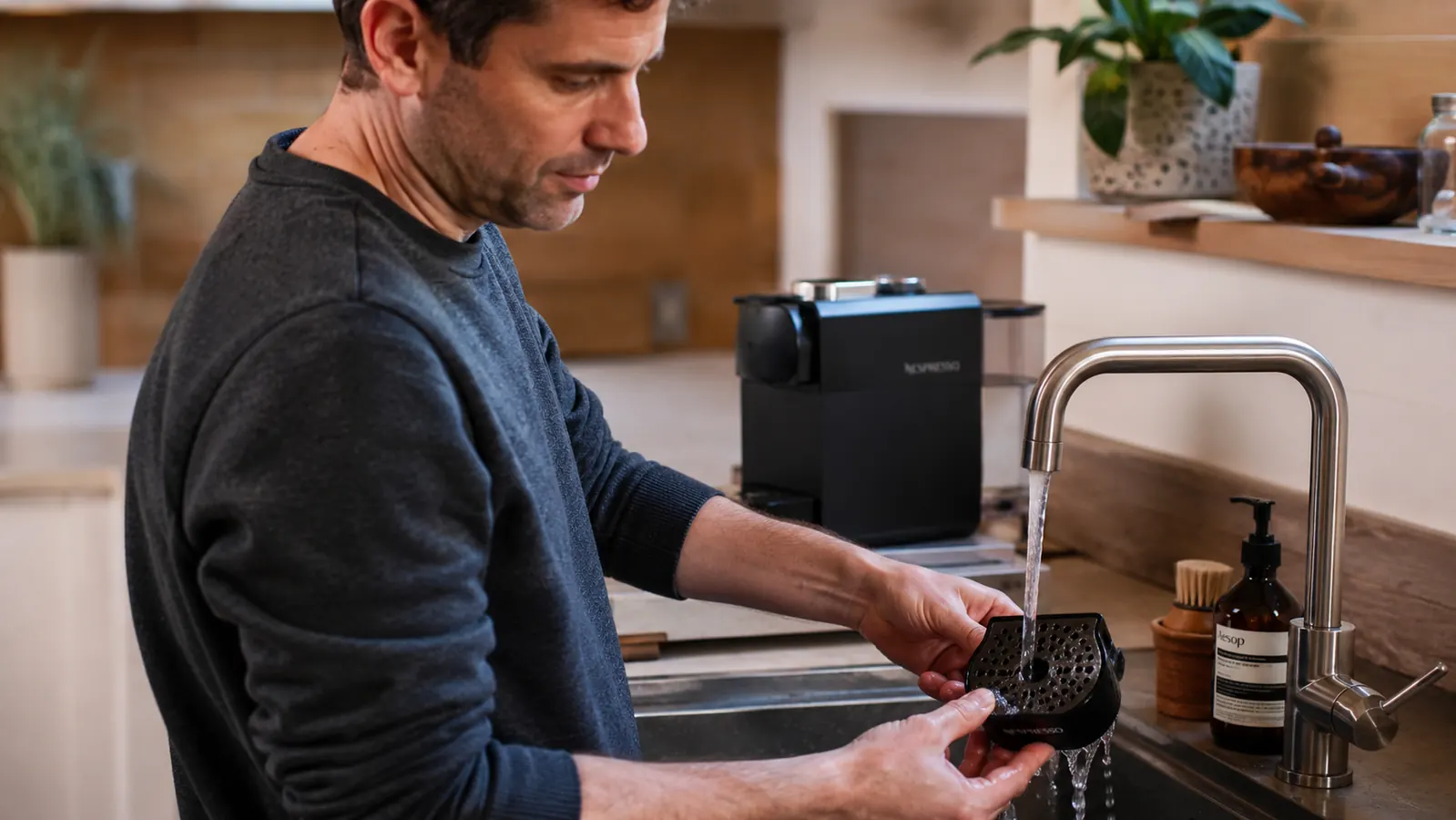
Filling it is easy enough. The tank pulls off cleanly from the back, it is clear so you can see the water level, and it fits under most faucets. Descaling is required every three months with average use, and the machine signals when it is time with a blinking light pattern. The descaling kit is sold separately for around $12. Nespresso recommends their specific solution, though compatible alternatives work. Budget one descaling kit per quarter.
What the Machine Actually Gets Right
The 30-second heat-up time is accurate and useful. I tested it on cold mornings when the machine had been off overnight and consistently clocked 25 to 32 seconds from button press to ready indicator. No competing machine in this price range heats up faster. When counter space is tight and mornings are rushed, a machine that is ready before you have finished grinding your groggy eyes open is worth something concrete.
The shot quality from official Nespresso Original pods is genuinely good for a machine at this price. The crema is consistent, the extraction temperature is well-controlled at 83 to 86 degrees Celsius (the sweet spot for espresso without scorching), and the intensity range across the pod lineup is wide enough to suit different preferences. I prefer the Ispirazione Roma and Kazaar for straight shots. Both pull cleanly every time. Shot-to-shot consistency over 90 days was the machine's strongest quality, which matters more than any single impressive morning.
The footprint is 8 inches deep and 4.7 inches wide. That is narrow enough to fit in the dead corner between a countertop appliance and the backsplash wall, which is where it lives in my kitchen. Machines that wider footprints simply cannot go there. In a small kitchen where every inch is spoken for, that narrowness is a genuine advantage.
Used pod storage is handled by an internal bin that holds about 10 capsules before it needs emptying. It is not large, but it keeps the counter clear during a session and takes five seconds to dump. That is a better design choice than some competing machines that require you to deal with the spent pod immediately.
What I Liked
- Heats to brew temperature in 25 to 32 seconds, consistently
- Footprint is 4.7 inches wide, fits in dead counter corners where nothing else goes
- Shot quality from official Nespresso pods is consistent across 90 days with no degradation
- Simple two-button operation with no settings to misconfigure or reset
- Automatic power-off after 9 minutes eliminates one habit to worry about
- 4.6-star rating across 6,000-plus verified reviews reflects a genuinely reliable machine
Where It Falls Short
- No milk frother included, latte or cappuccino requires a separate $50 to $60 Aeroccino purchase
- Pod cost of $0.85 to $1.00 each adds up to $50-plus per month for two daily shots
- 600ml water tank requires daily refilling for two-shot-per-day users
- Only two brew sizes, no temperature control, no programmable volume, no custom settings
- Third-party compatible pods produce noticeably thinner extraction than official capsules
- Descaling kit sold separately at around $12 per kit, needed quarterly
A Note on Claims vs Reality
Nespresso markets the Essenza Mini as a machine that delivers "cafe-quality espresso at home." That claim holds up better than I expected. The extraction pressure (19 bar pump) and temperature consistency produce a shot that is meaningfully closer to a proper espresso than what a Moka pot or AeroPress delivers, though both of those have their own strengths. If your reference point is a well-dialed espresso from a commercial machine, the Essenza Mini will fall short on body and texture. If your reference point is whatever you were making before, or the espresso shot from a mid-range cafe, the Essenza Mini holds its own.
Where the marketing overstates is on implied completeness. The imagery shows lattes and cappuccinos. The machine does not make those without a frother. The lifestyle photos show counters with clean open space around the machine. Real small kitchens do not look like that. These are normal marketing decisions, but worth noting so you buy with clear expectations rather than having to recalibrate after unboxing.
Who This Is For
The Essenza Mini is the right machine if you drink espresso or lungo straight, or with cold milk added, and you want a fast, reliable, countertop-efficient option. It is also right for someone who already knows they prefer the Nespresso Original pod ecosystem and wants a compact machine to run those pods. If you are a one-shot-per-day drinker who currently buys espresso from a cafe for $3 to $5 per cup, this machine pays back its cost in under two months. That math is real.
Who Should Skip It
Skip the Essenza Mini if milk-based drinks are central to your coffee routine and you are not budgeting for the separate Aeroccino. Also skip it if you are primarily a drip or filter coffee drinker, because this machine will not satisfy that preference and the pod cost is much harder to justify. If you want customization, adjustable temperature, or the option to use whole beans, this is the wrong category of machine entirely. And if the ongoing capsule cost does not fit your monthly budget, the savings math against cafe coffee will not work in your favor.
If you drink espresso straight and want 30-second mornings without a machine the size of a filing cabinet, this is the one.
The Essenza Mini by De'Longhi has a 4.6-star rating across more than 6,000 verified reviews. Check today's price and see whether the bundle with the Aeroccino frother makes more sense for your routine.
Amazon Check Today's Price on Amazon →